The land proposed for development at the southwest corner of the Edgell and Edmands intersection includes nearly 14 acres of undisturbed woodlands at 830 and 462 Edgell Road. Another four acres of open land have been cleared for development at 874 Edgell, which is directly west of Nobscot Park.
The rest of the land in the proposed development are currently single-family lots with houses along Edmands Road and Edgell Roads. Altogether about 30 acres have been included in past proposals by the developer.
Protecting the Nobscot Woodlands at Edmands and Edgell Road
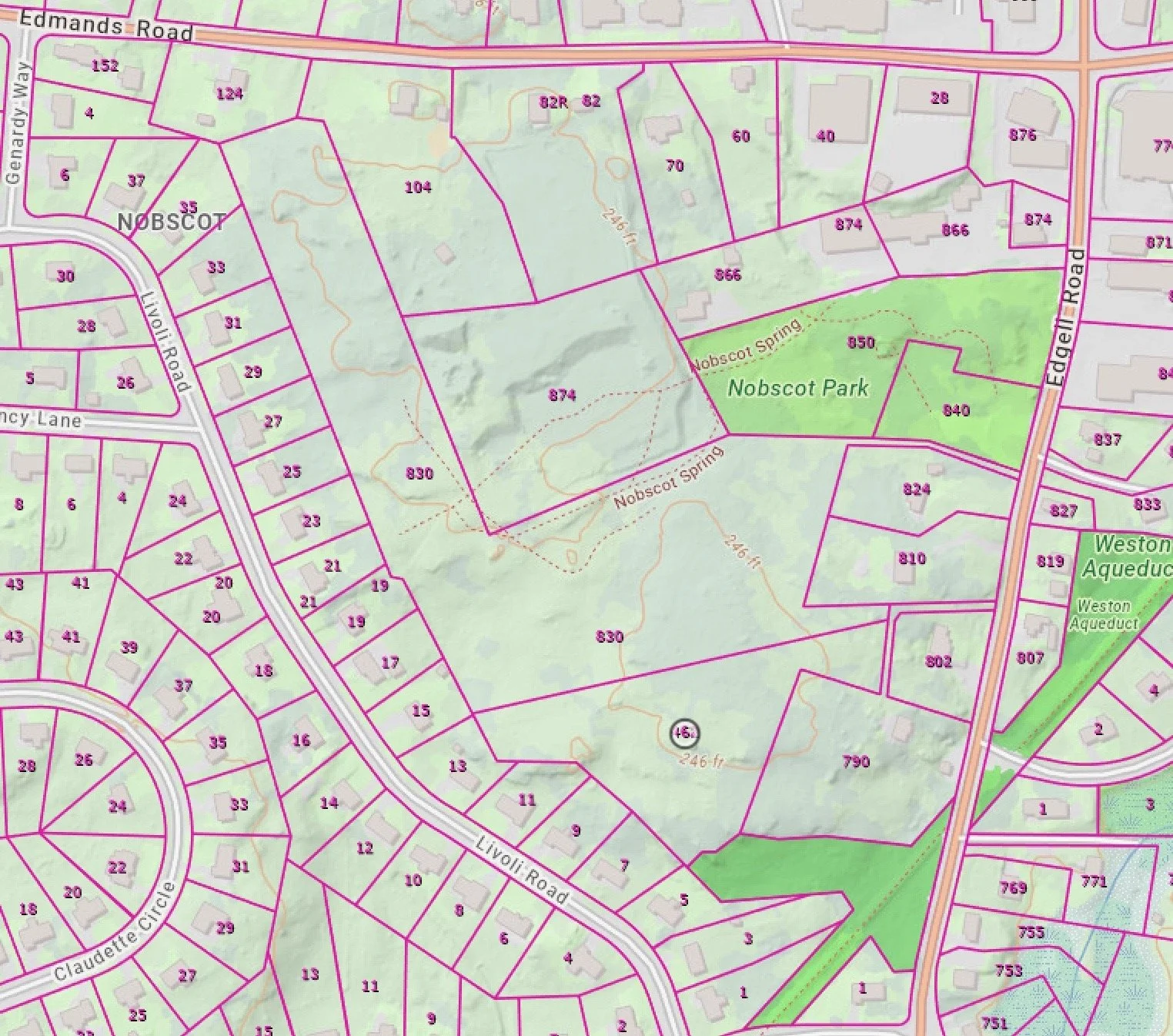
The largest parcels proposed for development include:
462 Edgell Road, 3.47 acres
790 Edgell Road, 2.06 acres
830 Edgell Road, 10.37 acres
874 Edgell Road, 4.14 acres
82 Edmands Road, 2.71 acres
104 Edmands Road, 2.87 acres
Most of the abutting properties along Edmands and Edgell Road have also been included in development proposals.
But is housing the best and highest use for the land? The environmental consequences of clearing 14 acres of woodland should be considered, especially in a city where open land has been disappearing.
Forests and natural ecosystems provide valuable, irreplaceable public goods: biodiversity, drinking water filtration, wildlife habitat, recreation, and resilience to impacts of climate change such as flooding and extreme heat. Proposals to develop the woodland have not considered any replacement or consideration for damage to public goods from this woodland.
Developing the woodlands could lead to significant negative impacts including:
A missed opportunity to expand open space and recreation in the City of Framingham;
Negative biodiversity impacts for wildlife in the Nobscot area;
Loss of carbon-rich forest land that could help the City reduce carbon emissions; and
Potential contamination of nearby aquifers and wetlands.
There are many positive impacts from preserving the Nobscot woodlands in their current natural state.
Benefit #1: Open space preservation and expansion, connecting forests and people
Nobscot Park at 850 Edgell Road comprises only 4.3 acres. The City can take actions to preserve the woodlands on the abutting 28-acre parcel for hiking, dog walking and the opportunity to connect with nature.
Also, this land abuts the Weston Aqueduct Trail, which stretches 1.1 miles from Water Street to Elm Street. It’s a short walk down Frost Street to the railroad right-of-way owned by CSX, which is proposed for conversion to the Bruce Freeman Rail Trail. The right-of-way runs from Nobscot through the Raymond Reservation and past the Garden in the Woods to the Boston Post Road in Sudbury. Eventually, when the trail is paved, it will provide easy bicycle access to stores along Route 20.
The existing parking lot makes it convenient for anyone across the city to visit and enter the trail system. About 500 apartment residents near the Edgell-Water Street intersection could walk directly into woodland trails from Nobscot Park, meeting one of the goals of the Nobscot Design Guidelines - walkable streets.
Benefit #2: Biodiversity support
In Massachusetts, thousands of resident and migratory animals live and interact within the mosaic of our ecosystems for food and water, reproduction, shelter, and migratory pathways. Biodiversity supports ecosystem resilience. Environmental stressors such as excessive rain, drought, and disease don’t affect every species in the same way, but in a diverse ecosystem, some members are better adapted to meet and respond to different challenges (Source: Mass Audubon).
To maintain genetic diversity, it’s important that habitats not become isolated. To thrive, they need to be connected to nearby habitats.
One of the most important habitats near Nobscot is centered at Nobscot Mountain in the Scout Reservation on Edgell Road. It has BioMap2 status, indicating a high level of biodiversity, including rare species. Starting at the southern edge of the Scout Reservation, conservation lands stretch nearly to Edmands Road that have been protected by the state, the city and Sudbury Valley Trustees – demonstrating their ecological importance.
East of Edgell, the Raymond Reservation and Garden in the Woods preserve additional large swaths of natural habitat.
It’s not surprising, then, that Nobscot residents report seeing and hearing a wide variety of animals, because wildlife isn’t limited to protected landscapes. Reported wildlife include:
Mammals: coyote, mink, bobcat (seen near the Garden in the Woods), deer, fox, opposum, groundhogs, chipmunks, striped skunk, beaver, fisher cat, raccoons, red and gray squirrels, rabbits, brown bats, voles, moles, deer mice, red and gray squirrels, weasel
Birds: great horned owls, barred owl, red bellied and pileated woodpeckers, hairy and downy woodpeckers, yellow shafted flickers, red winged blackbirds, grackles, eastern bluebirds, goldfinches, house finches, juncos, mourning doves, white throated sparrows, tufted titmouse, chickadee, song sparrows, house sparrows, Carolina wrens, fish crows and common crows, wild turkeys, red tailed hawks, sharp shinned hawk, Cooper hawk, broad winged hawk, red-shouldered hawk, bald eagle, house wrens, Baltimore orioles, hummingbirds, wood duck, mallard ducks, hooded merganser, rose breasted grosbeaks, ravens
Reptiles and amphibians: spring peepers, ring-neck snake, milk snake, Dekay’s snake, garter snake, toads, frogs, snapping and painted turtles
It’s likely that wildlife use the Edmands-Edgell parcel and the abutting aqueduct trails as wildlife corridors to the south and east. By preserving the woodlands, the City will support wildlife migration, biodiversity and habitat resilience in the face of climate change.
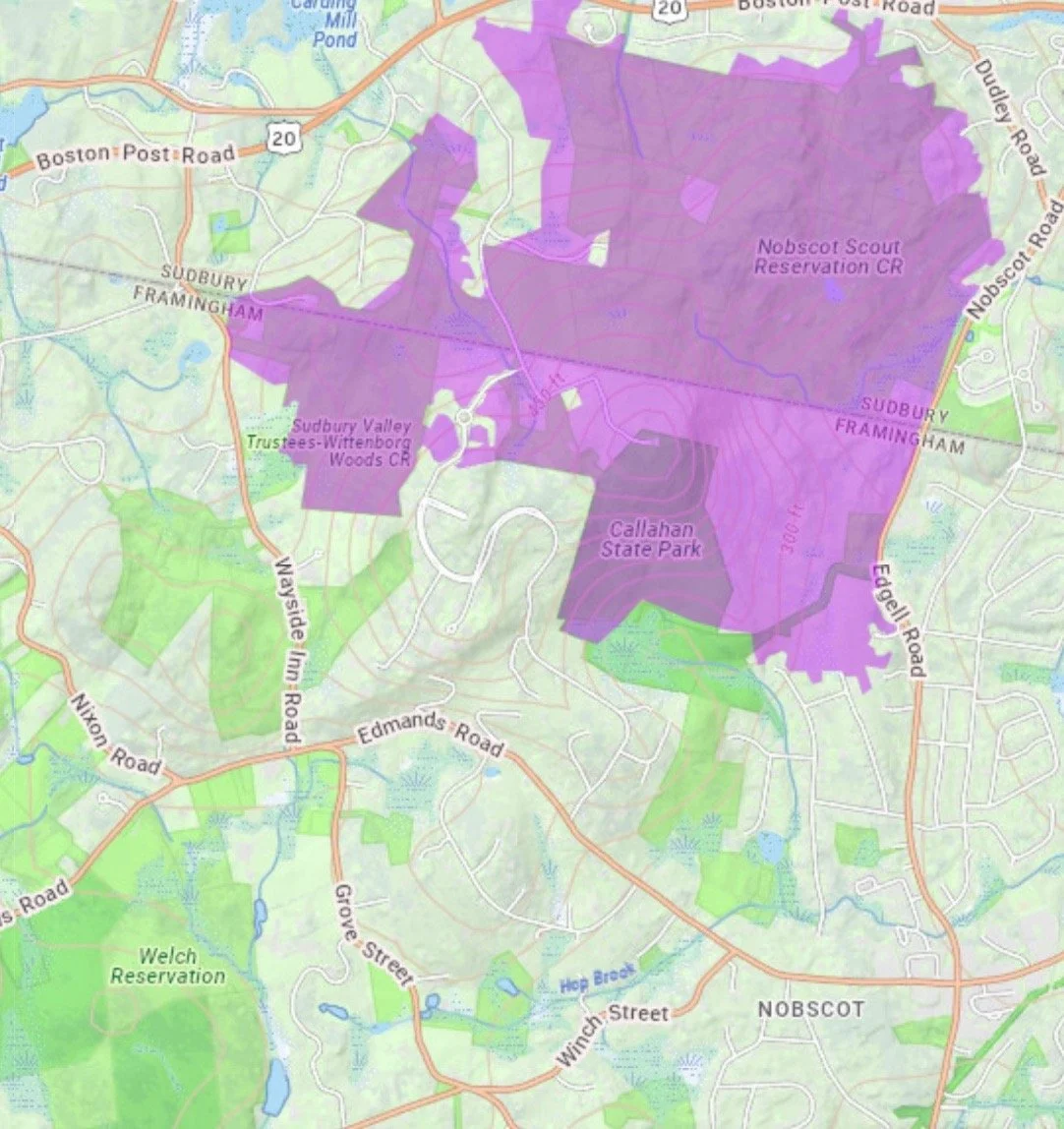
Source: Biomap Core Habitat - Rare Species Core - centered on Nobscot Scout Reservation and extending south into North Framingham. Note the conservation lands south of the Callahan that extend nearly to Edmands Road.
Benefit #3: Carbon sequestration
Natural areas, especially woodlands, store and sequester carbon. These woodlands and their ecosystems are essential components of our environment, a carbon-rich landscape that serves as a valuable carbon sink and continues to off-set greenhouse gas emissions for the city and the town.
If the parcel is developed for dense housing or for a neighborhood of 30 dwellings under current one-acre zoning, it would need to be cleared, stumped, grubbed, prepped, and re-graded for development. A large portion of the site would be converted from its carbon-rich, natural state to impermeable surface.
To put this loss into perspective, one acre of East Coast woodland can store about 33 tons of sequestered carbon and is capable of sequestering more than a ton of carbon each year – so 14 wooded acres sequester approximately 462 tons of carbon with 14 tons added each year.
The state of Massachusetts has set aggressive goals for sequestering carbon to moderate the effects of climate change. The state’s Forest Action Plan calls for increasing the land base of conserved forests by “keeping forests as forests.” It also sets a goal to maintain and increase the urban tree canopy. Conserving 14 acres of forest in the City of Framingham helps the state meet both of these goals. State funds are available to municipalities to conserve forest and park lands.
The majority of Massachusetts’ forestland, over 2.1 million acres, is privately owned. The Nobscot parcel is an example of a privately owned parcel that deserves the protection and stewardship of the City as part of its climate mitigation efforts.
Benefit #4: Groundwater protection
Woodlands serve as valuable recharge areas for groundwater by capturing rainwater and allowing it to slowly seep into the ground. While Framingham is fortunate to receive excellent drinking water from the Quabbin for most residents, the city should strive to preserve the purity of its lakes, streams and aquifers for residents on private wells and as a backup water supply.
A medium yield aquifer east of Edgell is only 750 feet from the city park that abuts the proposed development. Another 250 feet further east is a high yield aquifer that borders wetlands.
There’s evidence of ledge on the Edmands-Edgell property, with large boulders erupting above the ground. Any chemicals used or released during drilling or ledge breaking could enter the groundwater and migrate to nearby aquifers and private wells.
From its experience in South Framingham with the General Chemical spill, the City has evidence of how widely a contamination plume can spread over time. The best protection is prevention, but state and city regulations don’t protect groundwater from contamination caused by breaking ledge on a large scale. By preserving much of the land in its natural state, the city reduces the risk of contaminating nearby aquifers.
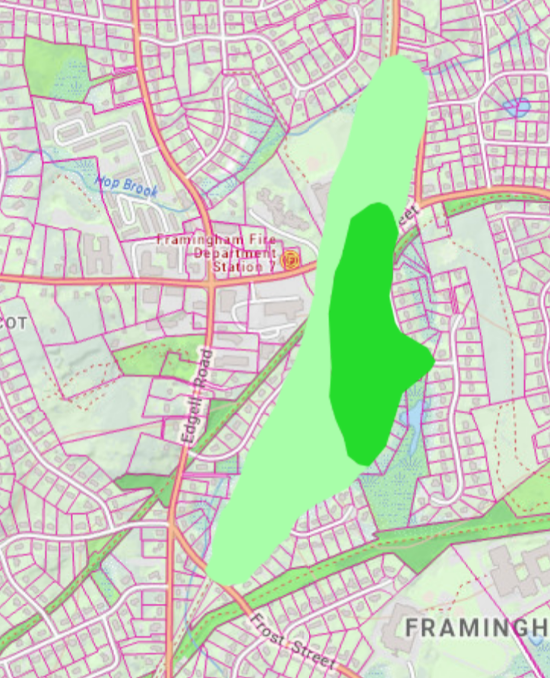
Source: MassMapper groundwater overlay. Dark green indicates a high yield aquifer. Light green indicate a medium yield aquifer.
Framingham’s 2020 Open Space Action Plan supports preserving this parcel
In 2020, the City developed an Open Space and Recreation Plan to guide its open space policies. According to the report, “Resident surveys and forums identified a strong desire on the part of the citizens of Framingham to identify parcels of open space and establish priorities for protection.”
The plan recommended that the City:
“Consider ways to further limit development of undeveloped or sparsley developed areas via regulations, acquisitions, conservation restrictions, or other means.”
Among its goals, the plan’s Seven Year Action Plan included:
Identify priority parcels for acquisition/protection for ecological value, agricultural value, and recreational value,
Aggressively pursue purchase or protection of priority open space parcels as they become available.
Rezoning woodlands for dense development runs counter to these goals.
In the associated map, the land at Edmands and Edgell is numbered 8, 9 and 10, demonstrating an interest in protecting these lands.
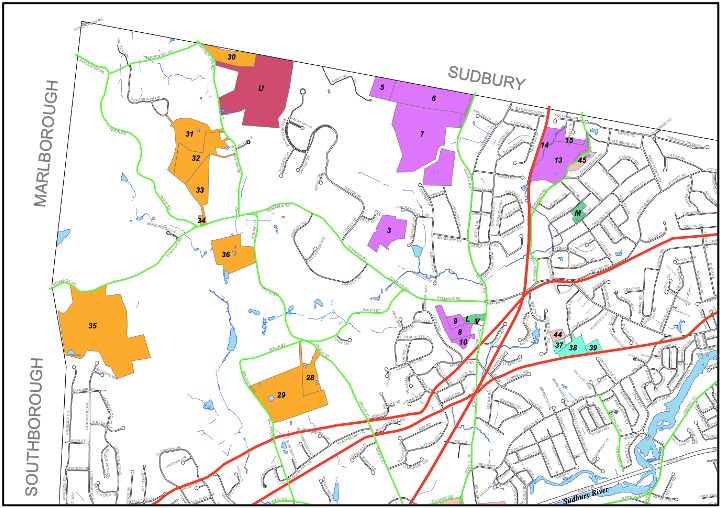
Numbers 8, 9 and 10 correspond to wooded and undeveloped land
In summary, the City has several compelling reasons to preserve these woodlands for the public good. While housing is needed across the state, the State of Massachusetts and leading organizations such as Mass Audubon have set forest preservation as a priority.
Mature woodlands and wild lands are precious resources that cannot be replaced. The city needs to consider all the public goods provided by the woodlands abutting Nobscot Park and preserve them for residents today and for future generations.
Researched and written by Carol McGarry. This information has been presented to Framingham’s Conservation Commission and City Council’s Environment and Sustainability subcommittee.